
Losing iconics >>> James Coburn: The Good, the Bad and the Ugly. Clint Eastwood: Blade Runner. Paul Newman: All That Jazz – “Dumb of me to refuse.” … Uma Thurman: Lord of the Rings… Jon Voight: One Flew Over the Cuckoo’s Nest. George Segal: All That Jazz. Ann Sheridan: Casablanca. John Travolta: Midnight Express. Christopher Walken: Taxi Driver<<<
GI-GANTESQUE
| Nurse: Doctor! Doctor! Something’s happened to Mrs. Archer! Doctor: Astounding growth! He can say that again – and he has although he was a woman last time (still a Dr Cushing, no less). His patient was Nancy Archer, a rich heiress. After a very close encounter a tall alien, she starts the Attack of the 50 Ft Woman. Shot in eight days for $89,000, the cheesy classic was so dreadful that Nathan H Juran hastily changed his director’s credit to Nathan Hertz. Now Tim Burton is doing it his way (better, hopefully, than Mars Attacks!). Maybe his writer, Gone Girl’s Gillian Flynn, has invented a better vengeance reason than her straying hubby, Harry. Allison Hayes, a Miss Washington turned B-movie queen (The Undead, Unearthly, The Disembodied) was Big Nancy in 1958. Andy Warhol’s director Paul Morrissey planned a re-hash in 1979, and Jim Wynorski with Sybil Danning in the 80s. HBO re-tooled it for TV in 1993 with Darryl Hannah. The real star, however, is Reynold Brown’s art on the poster (better known than the movie) created by future B-movie King Roger Corman. (Guess what his first 3-D project was in 2011 – The Attack of the 50ft Cheerleader with another beauty |
 queen, (Jena Sims). Some of today’s Hollywoodens are comparing Attack to Barbie – duh! She’s more of a Queen Kong. And her rampage is (or was) one helluva laugh. |
DOC ROBIN
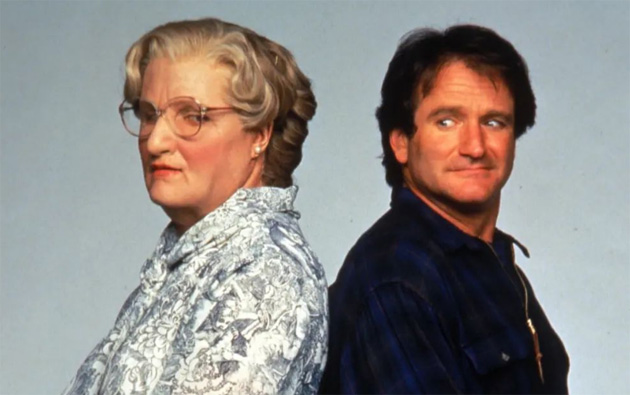
Mrs Doubtfire is such a Euro hit on-stage that some people have forgotten it was one of Robin Williams’ biggest hits in 1993. Not, of course, the director Chris Columbus (who also made Bicentennial Man with Robin and two Harry Potters). He told Business Insider of his plans for a documentary to show Williams at work. “We want to show Robin’s process. There’s something special and magical about how he went about his work and I think it would be fun to delve into it.” Yes, but how? “There’s two million feet of film in that warehouse! So there could be something we can do with all of that.” Indeed. “Early on in the process, he went to me, ‘Hey boss, the way I like to work, if you’re up for it, is I’ll give you three or four scripted takes, and then let’s play.’ What he meant was he wanted to improvise… I had to shoot the entire movie with four cameras to keep up with him.”
A HARD DAY’S SLIGHTAs we’ve all heard, John, Paul, George, Ringo are getting their own separate biopix within a four film series. Skyfall’s Sam Mendes is directing although LA columnist Jeffrey Wells says no one can play The Beatles. Quite a few have, Jeff. In eight films (mainly about John) from 1979’s Birth of the Beatles to Naked Lennon, 2009. They were played by such actors as Ian Hart (as John; twice), Andrew Scott (Paul), Mark Rice-Oxley (George), Kristian Ealey (Ringo). Seems only yesterday that I was with the Fab Four on their final day’s shooting (well, jumping!) of A Hard Day’s Night in an empty Twickenham field. |
IMAGINEThe credits of Woody Allen’s maybe last film, the French language Coup de chance, are enormous for a mere rom-com (finally having a US release). The roll features two of his kids, Bechet, in the costume department, and Manzi in “additional crew.” Plus a certain somebody called… well, now just stick with me for a minute and imagine that one day Woody has a query for someone in Camera and Electrics. Oh, says his first assistant, you need Leo Spartacus. Call him, says Woody. Spartacus, he yells. And the entire crew shouts back: I’m Spartacus! I’m Spartacus! I’m Spartacus! (Well, it might have happened!). |
THE SIXTH STONE

“I’ve been called a witch, a slut and a murderer. I’ve been hounded by the police and slandered by the press.” And that’s just the start of Catching Fire: The Story of Anita Pallenberg, a powerful documentary – rather than biopic – about the German 60s icon, the sixth Rolling Stone, lover, wife, mother, actress… remember Performance? And she was also Barbarella’s tyrannical Black Queen Scarlett Johansson narrates as Anita, from her unpublished memoir.
Another must-see rock-doc is The Lost Weekend: A Love Story, concerning the 18 month love affair – actually ordered by Yoko in 1973 – of John Lennon and their 23-year-old assistant, May Pang. “After 50 years, I finally get to share my story of John and myself through my eyes and my voice,” With a little help from her friends: Alice Cooper, Mick Jagger, Julian Lennon, Paul McCartney
A NORMAL NOBODY
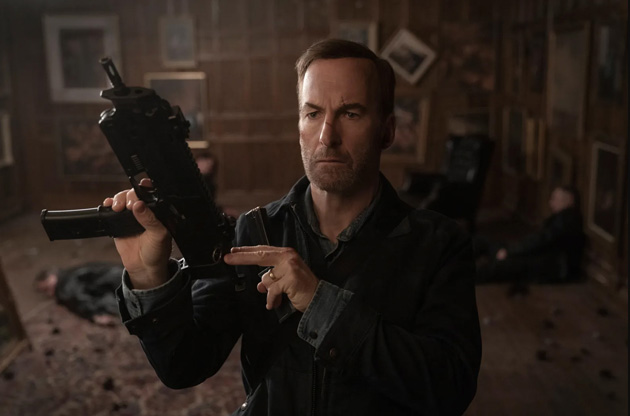
Just finished being agreeably surprised by Bob Odenkirk turning up as Elaine’s “doctor” boyfriend in an old Seinfeld (#143, Season 8, if you must know) when the phone rings and one of my agents tells me that Bob is making Normal… by Derek Kolstad, writer of his great Nobody action-movie and John Wick. Bob’s the temporary sheriff for a “normal” township called Normal – “full of sinister deep-seated secrets.” Oh and he’s called… Ulysses!
“I’d say it was a love letter to Hitchcock and the British crime thrillers I grew up with as a kid,” he told The Hollywood Reporter. ”A lot of action movies, where the guys are too handsome and built, it’s hard for the audience to buy into the idea that they’re in danger. I don’t have that problem. Audiences genuinely see me and go,’Oh, jeez, this guy is screwed. He’s going to get his ass handed to him.’ He gets to win through tenacity and cleverness.” As he will also in Nobody 2.
MARGOT-GO-GO

Everybody wants to work with the hottest star and producer. But Margot Robbie is keeping faith with her pals. She’s rejoining her Ken, Ryan Gosling, in an Ocean’s 11 prequel – and marrying Brad Pit in a modern-day re-make of the delightful 30s/40s Thin Man six-film franchise. (Pitt already did that, in a way, with Mr and Mrs Smith). The title might well be changed to be all socially correct: The Thin Couple? More likely: Nick and Nora. Actually, in the 1933 original the title referred to their quarry and not the detective Nick Charles, helped by his rich wife, Nora, and their terrier, Asta.
Stars losing colours >>>Jennifer Beal, Tatum ‘O’Neal and Sarah Jessica Parker: Pretty in Pink. Robert De Niro, Jack Nicholson: The Name of the Rose. Kirsten Dunst: The Brown Bunny. Michael Keaton: The Purple Rose of Cairo. Jodie Foster, Anjelica Huston, Diane Keaton: Blue Velvet. Sean Penn: Red Dragon. Emma Watson for Yelena Belova in Black Widow<<<
ROLL ©REDITS:
Anita Pallenberg, SK Global Entertainment, 2023; Attack of the 50ft Woman, Woolner Brothers Pictures, 1958; Jack Nicholson: Paramount, 1973; Margot Robbie: Warner Bros, 2014; Léa Seydoux: Les Films du Bélier, 2023; Robin Williams, Twentieth Century Fox, 1993; TC sketch: Graham Marsh, 1976. Plus enormous thanks to The Man: Daniel Bouteiller.
CHAMPION’S LEAGUE
The battle for the top spot between Marlon Brando and Jack Nicholson has – I think – come to an end. Recently, we‘ve seen Marlon leading Jack by one or two movies – and then, almost immediately, vice-versa. The gap is much wider now between the former Mulholland Drive neighbours. Latest research dug up more titles for Jack – Mr Mom, A Christmas Story, Striptease, The Bicentennial Man, Expend4bles – so that he is now safe (?) at the top of league with 177 films he chose not to make compared to Brando’s 172. But you know – you never know…
(The full list of their huge lists of bypassed films are not on their pages for now – one of the hassles being tackled in our – yes, very slow! – restructuring).
- Marlon Brando – 177
- Jack Nicholson – 172
- Paul Newman – 160
- Cary Grant – 150
- Robert De Niro – 140
- Tom Cruise – 135
- Dustin Hoffman – 126
- Mel Gibson – 118
- Sean Connery, Al Pacino – 117
Highest Brit remains, as always, Sir Sean at 117… followed by Laurence OIivier, 93; Richard Burton, 87; Peter O’Toole, 79; Elizabeth Taylor, 73; Peter Sellers, 72; Dirk Bogarde and James Mason, 68; Olivia De Havilland, 58; Vivien Leigh and Gary Oldman, 57.
Highest lady is Bette Davis, 97; Jodie Foster, 84; Michelle Pfeiffer, 81; Katharine Hepburn, 79; Julie Christie, 76; Meryl Streep, 75; Elizabeth Taylor, 73; Nicole Kidman, 72: Jane Fonda, 70; Julia Roberts, 68.
Younger Brigade: Johnny Depp 108; Leo, 75; Jim Carrey, 70; Madonna, 62; Natalie Portman, 57; Aishawarya Rai Bachchan, 40; Bridget Fonda, 36: Scarlett Johansson, Angelina Jolie, Uma Thurman, 35; Jake Gyllenhall, 33: Ben Affleck, 31.
(You’ll find the full list at Champions in the Main Menu)
A BOND MISS
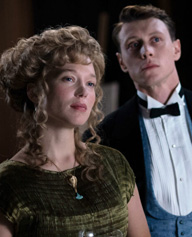
Is Léa Seydoux now a spy…or, to be more polite, a talent scout for Eon Productions? 007’s girl in both Spectre and No Time to Die appears to assisting the (rather quiet) search for the next Jimbo. In La bête (The Beast), one of her many new French films, Léa co-stars with Hammersmith’s George MacKay – Sam Mendes’ find for 1917. He learned French for the film, so this may not be his last Paris booking. As Gabrielle and Louis, they work extremely well together as star-crossed lovers in three time-lines: 1904, 1914 and 2044. And he looks the business in his retro tuxedo. ‘Twould be fascinating to cast an eye over her report for Barbara Broccoli’s eyes only. On verra as Léaa (and now even George) would say. We’ll see.